
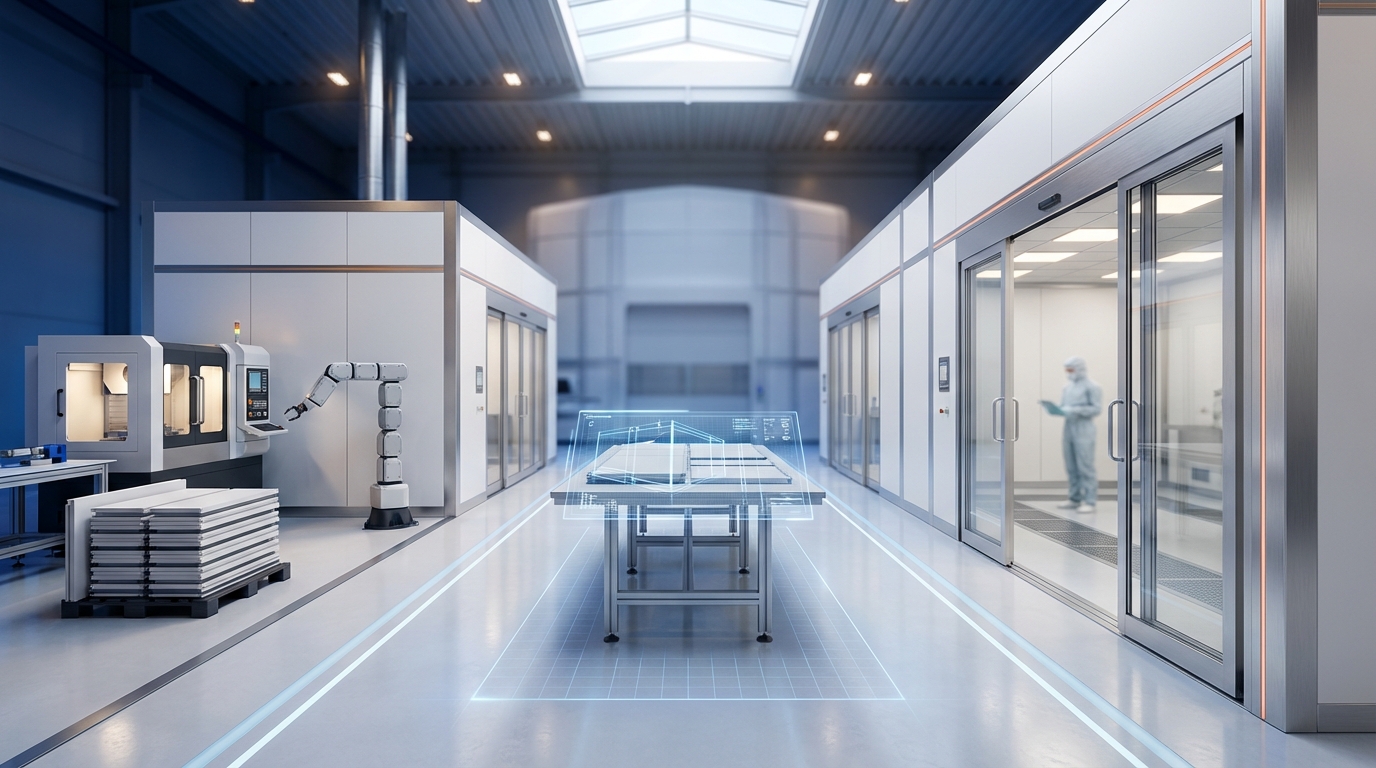
Modular Cleanroom Booths for WHX 2026 Demos
We design and deliver compliant cleanroom exhibition booths Dubai for high‑risk live clinical demos at WHX 2026, balancing regulatory burden, split‑venue logistics and on‑site delivery speed. This guide explains what organisers (DEC & DWTC), MOHAP and Dubai Civil Defence expect, the technical specifications that keep demos running, and how Burdak’s in‑house fabrication and full‑scale mock‑ups de‑risk your show.
Why WHX 2026 Raises the Stakes for cleanroom exhibition booths Dubai
WHX 2026 runs 9–12 February 2026 at the Dubai Exhibition Centre (DEC, Expo City Dubai), with WHX Labs (MedLab/diagnostics track) co‑timed at Dubai World Trade Centre (DWTC) roughly 10–13 February. The combined footprint (organiser estimates) exceeds 4,800 exhibitors and hundreds of thousands of professional visits — a scale that makes inspections, customs and logistics far less forgiving.
Key pressures for exhibitors
- Split‑venue logistics: separate customs/manifest flows and delivery windows for DEC vs DWTC.
- Intense inspections: DEC and DWTC require RAMS, engineered shop drawings and DCD fire/material compliance during build‑up and show days.
- Higher consequences: failed checks or customs holds can cancel a demo and erase WHX ROI for that exhibitor.
Regulatory checklist for a ‘clean’ demo booth in cleanroom exhibition booths Dubai
Meeting UAE and venue rules is non‑negotiable. Early planning and correct paperwork are the fastest path to an uninterrupted demo.
Mandatory submissions and timelines
- MOHAP temporary import & display permits: apply early. Medical devices for demonstration must have temporary import permits and “display‑only” labelling where required; retain re‑export evidence.
- RAMS & engineered shop drawings: submit to DEC/DWTC typically 30–45 days before build‑up. Late submissions trigger rejections, forced modifications or fines.
- DCD material/fire ratings: all structural materials must meet Dubai Civil Defence standards and be supported by certificates at submission.
- Sustainability / BOM: provide a Material Passport / Bill of Materials for “Better Stands” sustainability checks; venue policy often disallows in‑booth crate storage during show hours.
Consequences of missed windows
- Delayed approvals and stopped build‑up.
- Fines, forced removal or last‑minute rebuilds to meet DCD standards.
- Demo cancellation if MOHAP or customs holds equipment past show opening.
Technical spec: what a compliant modular cleanroom booth must include
A demo booth must behave like a controlled environment while remaining fully compliant with venue rules.
Air filtration and pressure control
- HEPA filtration: use H13/H14 media in final stage filters for particulate reduction.
- Air changes & pressure: design for adjustable ACH (recommend 10–20 ACH depending on demo risk) and selectable positive or neutral pressure modes so sensitive devices or biosamples are protected.
- Exhaust points: duct to venue‑approved extraction points; no ad‑hoc venting to public halls.
Materials and finishes
- Wipeable, low‑VOC finishes: powder‑coated aluminium frames, FR phenolic/HPL panels or sealed epoxy surfaces that are easy to disinfect.
- Fire safety: materials to carry DCD certificates for fire ratings and flame retardancy.
Operational systems
- Integrated waste & biohazard containment: secure sharps containers, labelled leakproof bins and temporary storage protocols for re‑export or hazardous removal.
- Power & inrush planning: dedicated circuits sized for demo loads, soft‑start or VFDs for equipment with high inrush, UPS for critical devices and generator planning if requested by the venue.
Common failure modes at WHX and how pre‑assembly fixes them — suited to cleanroom exhibition booths Dubai
Empirical data shows the same failure patterns across major Dubai shows; each has predictable fixes that are much cheaper implemented in factory than on the show floor.
Top failure modes
- Customs/documentation holds: mismatches in MOHAP or customs paperwork cause equipment to be held outside the venue.
- On‑site contamination risks: assembled booths with porous finishes accumulate contamination and fail hygiene checks.
- Late electrical/inrush trips: underspecified distribution results in tripped breakers or damaged equipment.
- Crate penalties: venues penalise in‑hall crate storage; unlabelled deliveries cause delays.
How factory mock‑ups reduce risk
- Pre‑assembly and full‑scale mock‑ups catch tolerance, electrical access and filtration routing issues early.
- Regional case studies and Burdak project data show 40–60% reduction in on‑site build time and far fewer inspection failures.
- Labelled, staged deliveries prevent manifest errors and speed customs clearance.
Burdak’s end‑to‑end solution for cleanroom exhibition booths Dubai
We manage every step of the design, manufacture and delivery process so clients can focus on the demo, not the logistics.
What we deliver
- In‑house fabrication & CNC precision joinery: tight tolerances, DCD‑compliant materials and factory‑sealed finishes that survive venue inspections.
- Guaranteed full‑scale 3D mock‑ups: onsite at our facility or video‑verified so we prove fit and function before shipping.
- DWTC/DEC‑ready RAMS & shop drawings: prepared and submitted within the required 30–45 day window; we handle resubmissions where needed.
- Material Passport / BOM support: we prepare sustainability docs for Better Stands and venue checks.
- Staged labelled delivery: skid‑by‑skid manifest, clearance document pack and timed handovers at DEC or DWTC.
Timelines and client checklist (recommended)
- 12 weeks pre‑show: confirm scope, devices, intended demos and MOHAP permit needs.
- 6–8 weeks pre‑show: finalise shop drawings and RAMS; we submit to venue engineering.
- 4 weeks pre‑show: full‑scale mock‑up and FAT (factory acceptance test); confirm BOM and labelled delivery schedule.
- 1 week pre‑show: staged delivery to customs/venue; final onsite install support and commissioning.
Real deliverables: signed RAMS & shop drawings, Material Passport, full filter & electrical spec sheets, labelled crates and a commissioning report on handover day.
FAQ
When is WHX 2026 and which venues are involved?
WHX runs 9–12 Feb 2026 at DEC (Expo City Dubai). WHX Labs / MedLab programming overlaps at DWTC around 10–13 Feb 2026. Expect separate logistics for each venue.
How far in advance do I need to submit RAMS and shop drawings?
Submit engineered shop drawings and RAMS 30–45 days before build‑up. Late submissions risk rejection, fines or enforced rebuilds.
What permits are required for medical device demos?
MOHAP temporary import permits and “display‑only” labelling are typically required; keep re‑export paperwork ready for customs. Burdak supports permit documentation and crate manifests.
What HEPA grade and ACH should I specify?
We recommend H13/H14 final‑stage HEPA filters with design ACH in the 10–20 range depending on demo risk. We size filtration and pressure control to the device class and MOHAP expectations.
How much time does factory pre‑assembly save?
Based on Burdak project data and regional case studies, full‑scale mock‑ups and pre‑assembly cut on‑site build time by approximately 40–60% and dramatically reduce inspection issues.
How do you handle split‑venue deliveries?
We produce separate, labelled manifests and staged deliveries for DEC and DWTC, coordinate customs paperwork and time handovers to avoid manifest mismatches and crate penalties.
To discuss a compliant turnkey solution for your WHX 2026 demo — including in‑house fabrication, CNC joinery and guaranteed mock‑ups — contact Burdak Technical Services and request our WHX readiness checklist.