
Avoid DWTC stand approvals ATM 2026 Delays
DWTC stand approvals ATM 2026 — At A Glance: Dates, Halls & Move‑In Windows
DWTC stand approvals ATM 2026 are a critical path item for any exhibitor at Arabian Travel Market (4–7 May 2026). ATM 2026 runs across Halls 1–8 plus Sheikh Saeed and Za’abeel Travel Tech zones, with a projected footprint supporting c.2,900–3,000 exhibitors. Early coordination avoids the common approval bottlenecks that cost time and money.
Key dates & footprint
- Show dates: 4–7 May 2026.
- Venue: Dubai World Trade Centre — Halls 1–8, Sheikh Saeed Halls, Za’abeel Travel Tech.
- Projected exhibitors: ~2,900–3,000; trade attendance ~55,000.
Move‑in and build windows
- Space‑only stands: larger build windows; expect from T‑6 days to T‑1, with on‑site structural checks.
- Shell scheme stands: shorter build windows; typically T‑4 to T‑1.
- All freight must use pre‑booked loading‑bay slots via DWTC marshalling — missed slots commonly push vehicles into holding yards.
Critical submissions & where to upload
- RAMS (site‑specific Risk Assessment & Method Statement): normally due ~30 days before move‑in. DWTC will block access if RAMS are generic or missing.
- Stamped structural calculations: required for any structure >4.0m (including double‑deckers).
- MEP orders (electrical, rigging, internet, 24‑hour power): cut‑offs typically 14–30 days before move‑in — late orders attract steep surcharges.
- Upload all documentation to the DWTC contractor portal per organiser instructions; Burdak coordinates and submits on behalf of clients when engaged.
DWTC Compliance Triggers That Cause Last‑Minute Chaos
Understanding the common DWTC compliance triggers lets you design your mitigation plan. These are the items that repeatedly force on‑site rework, delayed access or heavy surcharges.
Height & structural rules
- Standard maximum build height is 4.0m. Anything above requires stamped structural calculations and stamped drawings from a qualified engineer.
- Double‑deck structures need additional approvals and are treated as buildings — submit early to avoid blocked access.
MEP cut‑offs & surcharges
- Electrical, rigging, internet and 24‑hour power orders must meet DWTC cut‑offs (14–30 days pre‑show).
- Typical late order surcharges: 20–50% on MEP and 20–30% on on‑site handling. Late orders also increase the risk of failed demos.
Logistics traps
- All freight movements use pre‑booked loading‑bay slots; missing your slot commonly results in diversion to a holding yard and delayed build.
- DWTC requires official forklifts/handlers for certain movements; using unofficial handlers can incur fines and insurance gaps.
Documentation failures
- Wrong 3D formats or low‑quality BIM exports delay technical approvals.
- Generic RAMS or missing lifting plans are frequent reasons for build access to be blocked.
Quantifying The Risk — Real Costs, Delays & Competitor Mistakes
When approvals fail, the financial and reputational costs stack quickly. We see three recurring exhibitor failure modes that translate directly into measurable losses.
Penalties, surcharges and rework costs
- Late MEP orders: 20–50% surcharge plus potential for failed demonstrations if power or internet is delayed.
- On‑site handling/penalty fees: typically 20–30% above pre‑booked rates.
- On‑site rework (day labour, material rush, re‑engineering) often costs 1.5–3x the pre‑show warehouse fix cost.
Common exhibitor case studies
- Outsourced builder without pre‑assembly: missed loading slot and on‑site corrections cost an extra 48 hours and significant handler invoices.
- Late electrical/rigging orders: 30% surcharge, limited power slots, demo cancelled for a major exhibitor.
- National pavilion hold‑ups: incomplete structural packs delayed build access for multiple stands.
Hidden downstream costs
- Lost demos and sales opportunity cost.
- Extra handler invoices, overtime labour and rapid material procurement costs.
- Brand damage from a poorly executed stand or missed impressions.
How Burdak Eliminates Approval Risk — Technical Playbook
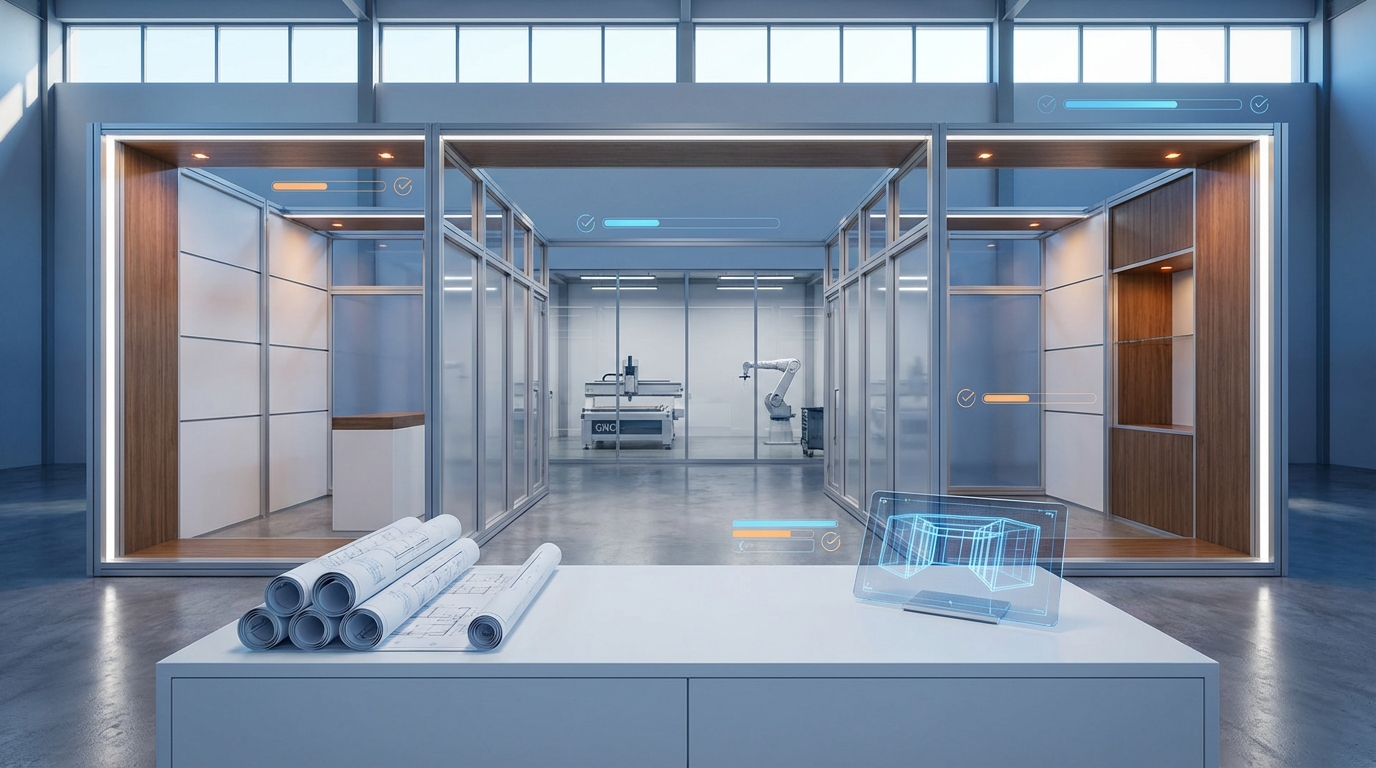
We apply a repeatable, technical playbook that removes the common failure points. Burdak Technical Services combines in‑house fabrication, BIM coordination and full‑scale mock‑ups to secure DWTC approvals early.
In‑house fabrication & CNC precision
- We manufacture components in our UAE facility using CNC controls for dimensional accuracy — this lowers the chance of on‑site modifications and speeds approval via predictable assemblies.
Full‑scale warehouse mock‑ups
- Mock‑ups allow client sign‑off on structure and MEP interfaces. We catch structural and service clashes before they reach DWTC and produce the exact photos and as‑built documentation DWTC reviewers expect.
RAMS, BIM/3D and MEP coordination
- Standard deliverables: engineered calculations, site‑specific RAMS, BIM exports in DWTC‑preferred formats, and stamped structural packs for >4.0m builds.
- We prepare and submit documentation to the DWTC contractor portal on behalf of clients where agreed, reducing submission errors.
Logistics & project management
- 24–48h quoting, an assigned project manager, pre‑booked loading slots and pre‑clearance support minimise late logistics issues.
- We coordinate ATA/temporary import logistics and can supply DWTC‑approved handlers and forklifts to avoid on‑site penalties.
8‑Week Action Checklist For ATM 2026 — Timeline & Owner Tasks
- Week ‑8 to ‑6: Finalise stand design. Submit 3D/BIM and structural pack (owner: design lead/Burdak). Confirm RAMS owner.
- Week ‑6 to ‑4: Place MEP orders (electricity, rigging, internet, 24‑hour power). Confirm loading‑bay slots. Schedule warehouse mock‑up (owner: PM/Burdak).
- Week ‑4 to ‑2: Client mock‑up sign‑off. Pre‑site coordination with DWTC. Arrange ATA/temporary import clearance if required.
- Week ‑1: Final transport plan, on‑site team brief, QA checklist and contingency plan (alternate loading slots, extra handlers).
- Day‑0 to Day‑1 (move‑in): On‑site install runbook, MEP verification, and immediate DWTC liaison. Post‑show dismantle coordination planned in advance.
Call‑to‑action: To book a Burdak compliance review and a full‑scale mock‑up slot for ATM 2026, contact our Projects team. Typical turnaround: 24–48h for quotes, mock‑up slots allocated on a first‑come, first‑served basis and limited as show dates approach. Email projects@burdak-technical.com or call our Dubai office to reserve.
FAQ — DWTC stand approvals ATM 2026
Q: When must RAMS be submitted?
A: RAMS are typically due ~30 days before move‑in. DWTC requires site‑specific RAMS; generic templates are often rejected.
Q: What triggers a stamped structural calculation?
A: Any structure exceeding 4.0m or double‑deck stands require stamped engineer calculations and drawings.
Q: What are the consequences of late electrical or rigging orders?
A: Expect 20–50% surcharges, limited slot availability and a heightened risk of demo failures if power or internet is delayed.
Q: How does Burdak reduce approval risk?
A: Through in‑house fabrication with CNC precision, full‑scale warehouse mock‑ups, prepared RAMS and engineered packs, BIM/3D exports and hands‑on DWTC submission support.
Q: How do I book a compliance review?
A: Email projects@burdak-technical.com with your show name, stand number and concept files. We offer 24–48h quoting and limited mock‑up capacity — early booking is essential.