
How to Beat DWTC Complex Structure Rules at ATM 2026
ATM 2026 at a glance: scale, dates and why compliance matters (DWTC stand height regulations)
DWTC stand height regulations are front‑and‑centre for anyone exhibiting at Arabian Travel Market (ATM) 2026. The event runs May 4–7, 2026 at the Dubai World Trade Centre (DWTC) and brings together roughly 2,600+ exhibitors and over 50,000 visitors. For brands competing for attention in a crowded hall, how you build your stand directly affects ROI: height determines visibility, double‑deck options change usable sqm, and compliance issues can stop your build or trigger heavy surcharges.
Organisers enforce technical rules tightly — non‑compliance can mean lost handovers, additional fees or even removal of non‑compliant elements. Understanding and planning for DWTC rules early protects lead generation, protects your investment, and ensures your stand performs across the four show days.
DWTC technical rules every exhibitor must master
Mastering the DWTC technical rules is non‑negotiable. Key limits and requirements you must know:
- Height limits: Inline and corner stands — maximum 4.0 m. Island stands — maximum 6.0 m.
- Complex Structure definition: Any structure above 4.0 m or a raised platform higher than 600 mm is classified as a Complex Structure and triggers additional approvals.
- Approvals required: Structural drawings and calculations stamped by a UAE‑registered engineer; RAMS (risk assessments and method statements); and DWTC approval forms. These must be submitted well in advance.
- Submission lead times: Expect to submit complex structure documentation 30–60 days before build. Late submissions incur heavy surcharges.
- Rigging and points: Rigging is limited; you must book venue rigging points through DWTC and adhere to load limits and booking windows.
- Build‑up / tear‑down windows: Build‑up typically starts 3–4 days pre‑show. Tear‑down windows are strictly enforced; late collections are penalised.
- Waste & skips: Skips/waste removal bookings must be pre‑arranged with DWTC and cleared before handover of the shell.
- Sustainability reporting: For 2026 DWTC requires sustainability data (GHG, materials consumption) under Federal Decree‑Law No.11, and compliance with the venue’s single‑use plastic ban (effective Jan 1, 2026) and catering fuel rules (eg, EcoBurner where applicable).
Top exhibitor pain points at ATM (real‑world examples)
Exhibitors commonly trip over the same three issues:
- Late complex structure submissions: When drawings and calculations arrive late, organisers reject builds or apply surcharges (reported 20–50% extra). Example: a last‑minute double‑deck submission caused a stand to lose its handover slot and pay premium crane and labour fees.
- On‑site rework from outsourced fabrication: Contractors who outsource joinery often discover fitment or finish problems on site, resulting in delays and extra freight. Example: a prefabricated staircase didn’t match the DWTC opening and required on‑site modification and extra shipping costs.
- Sustainability & compliance failures: New bans on single‑use plastics and stricter catering rules have caught teams out. Example: giveaways confiscated for non‑compliant materials and extra charges for non‑EcoBurner fuel sources, plus late GHG data submissions.
How Burdak solves these pain points with in‑house fabrication and mock‑ups
We tackle the pain points proactively with a technical delivery model built for DWTC and ATM timelines. Burdak provides 24–48 hour quoting, UAE‑licensed project managers, and full in‑house fabrication including CNC joinery, metalwork and finishes. Key elements of our approach:
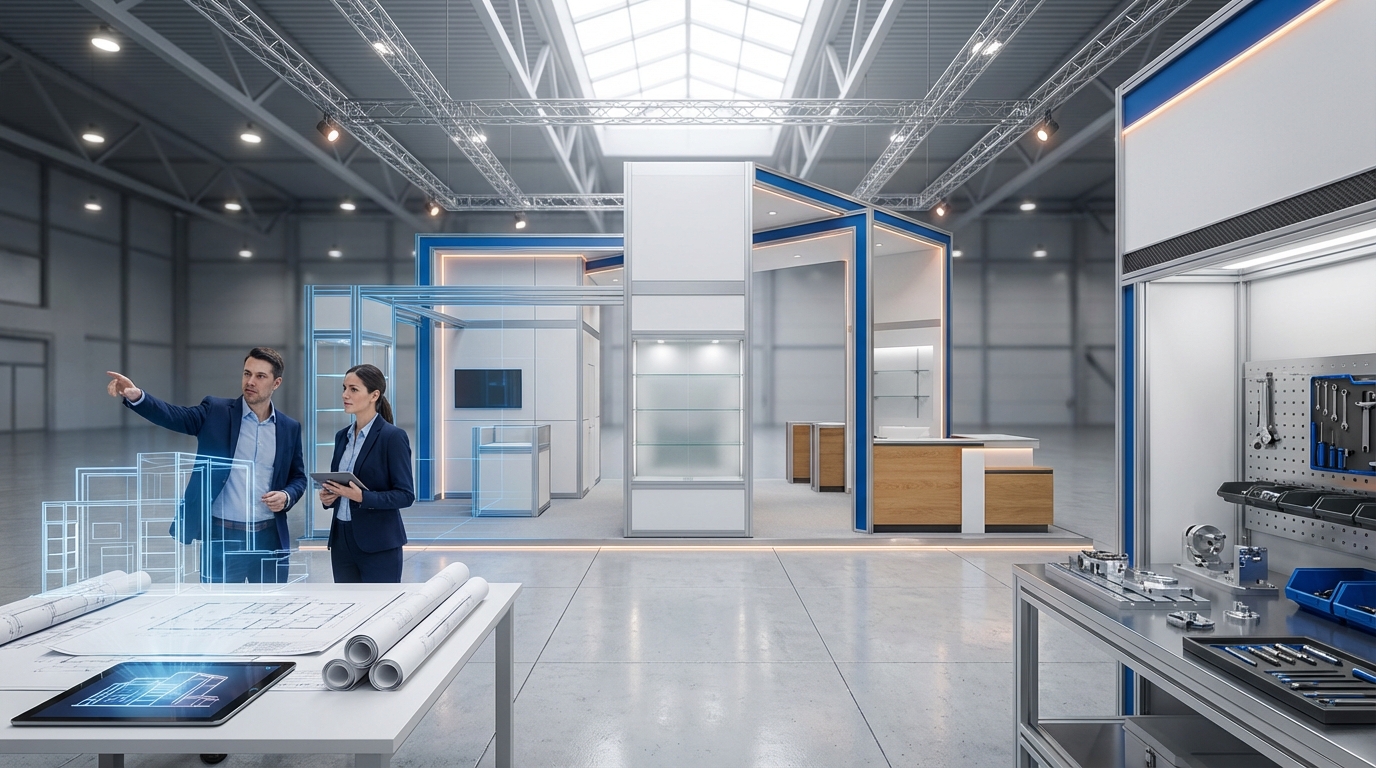
- Warehouse pre‑assembly (3D mock‑ups): We build full‑scale mock‑ups in our warehouse so clients can sign off on fit, finish and structural connections before transport. This eliminates most on‑site rework and verifies interfaces such as stair openings, mezzanine plates and cladding tolerances.
- UAE‑registered engineering coordination: Our team prepares approval‑ready packs: structural calcs, sealed drawings and RAMS coordinated with a UAE‑registered engineer. This reduces DWTC review cycles and lowers the risk of late penalties.
- Sustainability & GHG data: We produce a materials breakdown and energy use estimate to support DWTC GHG reporting and Federal Decree‑Law No.11 requirements. We also source EcoBurner‑compliant catering equipment and zero‑plastic materials where needed.
- On‑site rapid response: Our dedicated on‑site team manages final assembly, rectifies unexpected issues and coordinates with DWTC rigging to meet load and point requirements.
Measured benefits we deliver:
- Significantly reduce on‑site build time by conducting full QA in our warehouse — clients typically see final onsite installs completed faster compared with outsourced models.
- Reduce approval delays by providing complete, engineer‑stamped packs — avoiding the 20–50% late submission surcharges commonly reported.
- Remove scope for last‑minute rework and avoid extra freight or crane hire through pre‑verified modular assemblies.
Case anecdote: A double‑deck client facing potential rework had their structure fully pre‑assembled in our warehouse. We identified a mismatch in the mezzanine support interface, corrected it, and transported the ready‑to‑install module — preventing a costly on‑site double‑deck rework and preserving the handover slot. To get the same certainty, request an approval‑ready pack and mock‑up from us early in your design phase.
Practical pre‑show checklist & timeline for ATM exhibitors
Working backwards from May 4, 2026, here’s a practical timeline to stay compliant with DWTC stand height regulations and other rules:
- By mid‑March (submit complex structure paperwork): Submit structural drawings and calculations stamped by a UAE‑registered engineer. Book rigging points and skips.
- 6–8 weeks out (finalise design and sustainability list): Confirm final stand design, materials list for GHG reporting, and catering requirements (EcoBurner confirmation if required).
- 3–4 weeks out (mock‑up and client sign‑off): Schedule full‑scale mock‑up in our warehouse. Approve finishes, joinery interfaces and sign off the RAMS and structural pack.
- 3–4 days pre‑show (transport and managed build): We manage loading, transport and on‑site assembly; DWTC build‑up window typically opens 3–4 days pre‑show so early arrivals are tightly scheduled.
- Show days (on‑site support): Our crew handles final touches, rigging coordination and immediate troubleshooting.
- Immediate post‑show (managed dismantle & certified waste removal): We manage tear‑down, transport and certified waste removal (skips booked in advance), plus material recovery where possible for sustainability reporting.
What to send to Burdak when you’re ready:
- Stand drawings (CAD / 3D files)
- Power schedule and lighting plan
- Catering/F&B needs and fuel requirements
- Brand materials and giveaway specifications (to check single‑use plastic compliance)
FAQ
- Q: What exactly constitutes a Complex Structure at DWTC?
A: Any structure above 4.0 m or a raised platform higher than 600 mm. These require stamped structural calcs and drawings from a UAE‑registered engineer.
- Q: How far in advance do I need to submit approvals?
A: Submit complex structure documentation 30–60 days before build. Late submissions often incur surcharges of 20–50%.
- Q: What are the height limits for different stand types?
A: Inline/corner stands: 4.0 m. Island stands: 6.0 m.
- Q: Are single‑use plastics allowed at ATM 2026?
A: No. UAE single‑use plastic bans are effective from Jan 1, 2026 — DWTC will enforce compliance and confiscate non‑compliant items.
- Q: Do I need to use EcoBurner for catering?
A: Where DWTC rules require it, catering fuel must be EcoBurner‑compliant. Confirm with organisers and include in your catering brief to avoid on‑site refusals.
- Q: How can Burdak help speed approvals?
A: We deliver engineer‑stamped approval packs, complete materials breakdowns for GHG reporting, and full‑scale mock‑ups that remove common DWTC queries — shortening review cycles and reducing surcharge risk.