
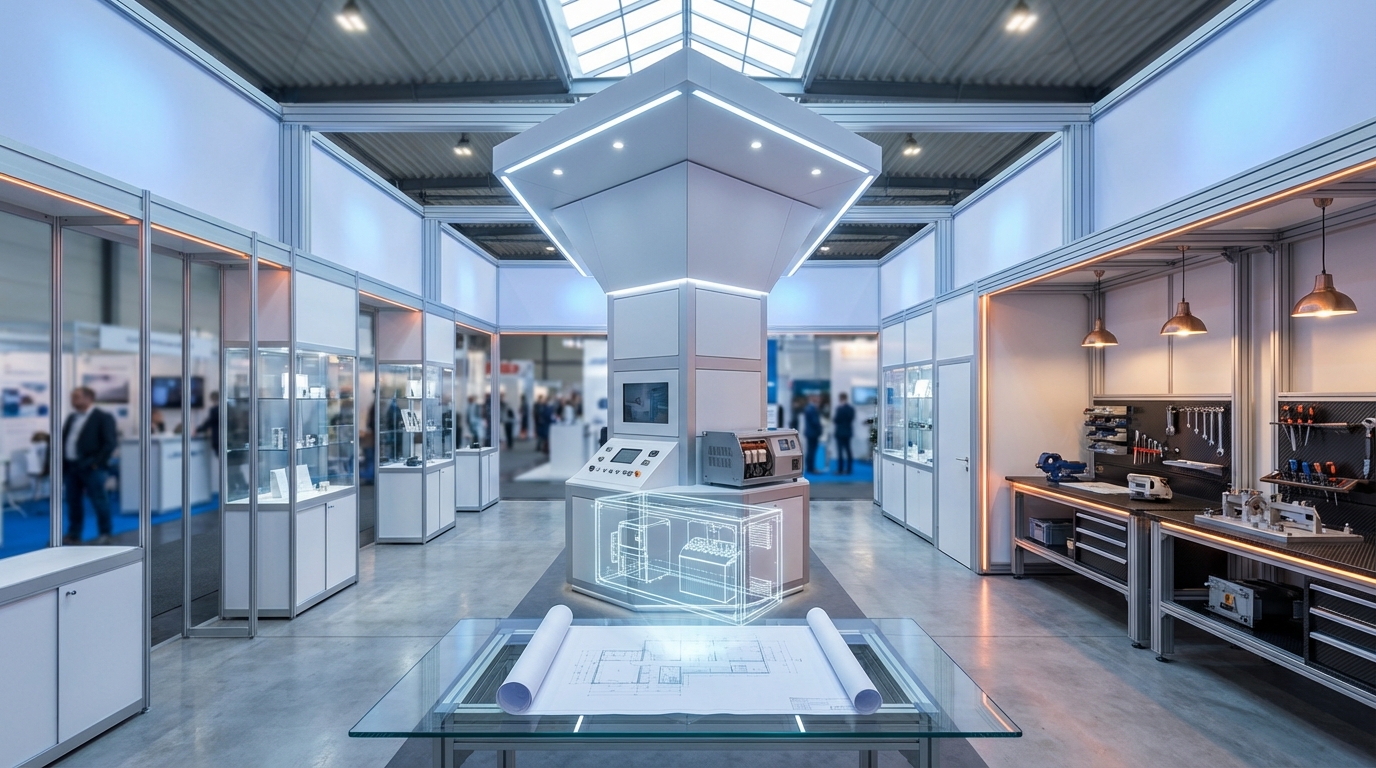
WHX Dubai 2026: 24‑Hour Power and RAMS Playbook
WHX Dubai exhibitor power requirements must be booked and clarified well before move‑in. With WHX split across two venues and heavy clinical demo volumes, power, RAMS and logistics become the critical path items that determine whether your medical devices run, are inspected, or get turned away.
Why WHX 2026 Is a Different Beast — DEC + DWTC Split (WHX Dubai exhibitor power requirements)
WHX runs 9–12 February 2026 at Dubai Exhibition Centre (DEC) while WHX Labs (Medlab track) runs 10–13 February 2026 at Dubai World Trade Centre (DWTC). Expect ~4,300 exhibitors at DEC and ~900 at DWTC (combined ~4,800+) with c.270,000 professional visits across the healthcare week. The dual-venue layout multiplies transit, MEP complexity and inspection points — and that directly affects how you book 24‑hour power and clear RAMS.
Why the split increases risk
- DEC is farther from central Dubai: longer freight transit, fewer nearby hotels — missed slots cost hours.
- DWTC has tightly timed loading yards and holding areas; holding here means waiting for the next window.
- Medical demos require continuous power and proper clinical-sample handling; distance equals more opportunities for documentation or power orders to slip.
Critical deadlines checklist
- 24‑hour/continuous power: Book as soon as possible — venues typically close standard booking windows 21–30 days before build.
- Site‑specific RAMS: Submit a venue-tailored Method Statement at least 14–21 days pre-show.
- Temporary import / ATA Carnet: Apply 21–30 days before shipping to avoid customs delays.
- Electrical & MEP orders: Final load and distribution plans 14–21 days ahead.
- On‑site project manager confirmation: Lock 7–10 days pre-show.
The Single Biggest Technical Risk — 24‑Hour Power (WHX Dubai exhibitor power requirements)
Continuous power is non-negotiable for analyzers, incubators and cold‑chain equipment. If you run clinical analyzers or require stable refrigeration, a power interruption can invalidate demos, ruin samples and breach site rules.
Why continuous power is mandatory
- Analyzers and reagents require stable voltage and uninterrupted runtime to maintain calibration and results validity.
- Cold chain: freezers and refrigerators need constant supply or validated UPS/generator switchover to avoid sample loss.
Booking windows, surcharges and risks
- Venues typically close standard power bookings 21–30 days out; late or on‑site requests are frequently refused.
- Surcharge ranges reported at WHX/Arab Health vary from 20–100%+ for late MEP/electrical orders.
- On‑site denial risks: venues enforce PAT testing, trunking, no live work, and may refuse temporary 24‑hour supplies if documentation is missing.
Sample electrical load sheet template (submit 14–21 days pre-show)
- Exhibitor name & stand number
- Device description & quantity (e.g., Chem Analyzer X, 1 unit)
- Continuous kW required per device (see sidebar)
- Peak kW / starting current notes
- Voltage / phase required (230V single / 400V three‑phase)
- Socket type & trunking required
- UPS / generator backup needs
- PAT testing status & certification date
- Contact: project manager + onsite rep
Submit the completed sheet to the venue and to your MEP coordinator 14–21 days before build. We at Burdak produce this document as part of our site‑specific MEP packs.
How to calculate kW needs for common analyzers (sidebar)
- Small benchtop analyzers: ~0.2–0.5 kW (200–500 W).
- Medium lab analyzers: ~0.5–1.5 kW.
- Incubators / small freezers: 0.8–1.5 kW running, higher on start.
- Ultra-low freezers / centrifuges: 1.5–3.0 kW peak.
Rule of thumb: add a 25–30% buffer for inrush/start currents and allow dedicated circuits for each critical device. Burdak’s engineers verify these figures during mock‑ups.
RAMS and Clinical Sample Handling — What Venues Actually Inspect (WHX Dubai exhibitor power requirements)
Both DEC and DWTC inspect documentation and physical controls. Generic RAMS fail; venues demand site‑specific Method Statements and evidence that build sequence and PPE are managed.
Venue expectations
- Site‑specific RAMS: Sequence of build, isolation, electrical termination plans and emergency procedures.
- PPE & manpower: Named operatives, qualifications and induction records.
- Labelled demo devices: All demo units must be clearly labelled and have temporary import paperwork if applicable.
Clinical sample rules
- UN 3291 disposal procedures must be in place and documented.
- Samples may only be distributed to licensed HCPs; maintain a signed sample log with recipient license number.
- Designated clinical waste bins and licensed waste contractor arrangements are mandatory.
Common causes of RAMS rejection
- Generic, non-site-specific Method Statements.
- No PAT testing or uncertified electrical connections.
- Failure to show clinical waste disposal contractor confirmation.
- Unlabelled demo devices or missing temporary import docs.
Burdak’s 6‑point RAMS checklist
- Site‑specific Method Statement for DEC/DWTC.
- PAT test certificates and trunking plan.
- Named operatives with induction records.
- Clinical sample handling SOP + UN 3291 arrangements.
- Device labelling and temporary import/ATA Carnet evidence.
- MEP handover & emergency shutdown sequence.
Logistics & Approvals — Avoiding Holding Yards and Missed Slots (WHX Dubai exhibitor power requirements)
DEC vs DWTC logistics differ materially: DEC’s longer transit times and fewer nearby hotels increase risk of missed windows; DWTC enforces strict loading-bay times with holding yards for late arrivals.
Key comparisons
- Transit times: DEC longer from Jebel Ali / Al Quoz; plan +2–3 hours for freight movement.
- Hotel pressure: DEC has fewer immediate options — stagger staff arrival.
- Loading bays: DWTC tight slots; missed arrival often means waiting for the next slot.
Customs & permits
- ATA Carnet: Best for reusable demo devices to avoid customs duty but requires correct documentation.
- Temporary Admission: Alternative route but can be slower if applied ad hoc.
Pre‑staging plan & warehouse advantage
- Pre‑assemble and full‑scale mock‑ups in a nearby warehouse to validate fit, MEP and electrical routing.
- We reduce loading‑bay time by hours by delivering components ready for lift-in and with labelled installation sequences.
- Book forklifts, rigging and freight 14–21 days ahead; confirm time windows 7 days before move.
The Burdak Solution — In‑House Fabrication, Mock‑Ups & MEP Coordination (WHX Dubai exhibitor power requirements)
We provide an integrated service designed around the pain points above:
- 24–48h quoting so you can secure venue MEP and power early.
- In‑house CNC fabrication for precision builds that fit first time, avoiding on‑site fixes.
- Full‑scale warehouse mock‑ups with client sign‑off to validate electrical routes and device placement.
- Site‑specific RAMS and electrical load sheets produced and submitted on your behalf.
- Dedicated on‑site project managers coordinating MEP schedules, PAT testing and contingency power.
3‑step client action plan
- Book power & RAMS slot: Immediately secure 24‑hour power and submit a site‑specific RAMS 21–30 days out.
- Schedule mock‑up 14–21 days pre‑show: Validate fits, loads and trunking in our warehouse; confirm final load sheet.
- Confirm on‑site PM and contingency power: Lock your Burdak PM 7–10 days pre‑show and arrange UPS/generator backup if needed.
FAQ
- Q: When should I book 24‑hour power for WHX?
A: Book as early as possible — venues often close standard bookings 21–30 days before move‑in. Late requests risk refusal or 20–100%+ surcharges.
- Q: Do I need an ATA Carnet?
A: If demo devices are reusable and returning after the show, an ATA Carnet is the preferred option to avoid duties. Temporary Admission can work but needs earlier planning.
- Q: What causes RAMS rejection?
A: Generic Method Statements, missing PAT certificates, unverified clinical waste arrangements or unlabeled demo devices — all common rejection causes.
- Q: How much power do common analyzers use?
A: Small benchtops ~0.2–0.5 kW; medium analyzers 0.5–1.5 kW; incubators 0.8–1.5 kW; plan a 25–30% buffer for start current.
- Q: How does Burdak prevent on‑site surprises?
A: Our in‑house fabrication, CNC accuracy and full‑scale warehouse mock‑ups eliminate fit and electrical surprises. We also produce site‑specific RAMS and manage MEP bookings.
For WHX 2026, the path to a successful medical demo is clear: secure 24‑hour power early, submit site‑specific RAMS, pre‑stage in a warehouse mock‑up and assign an on‑site PM. We at Burdak Technical Services handle these critical items end‑to‑end — contact us to lock your power, RAMS and mock‑up slots today.